
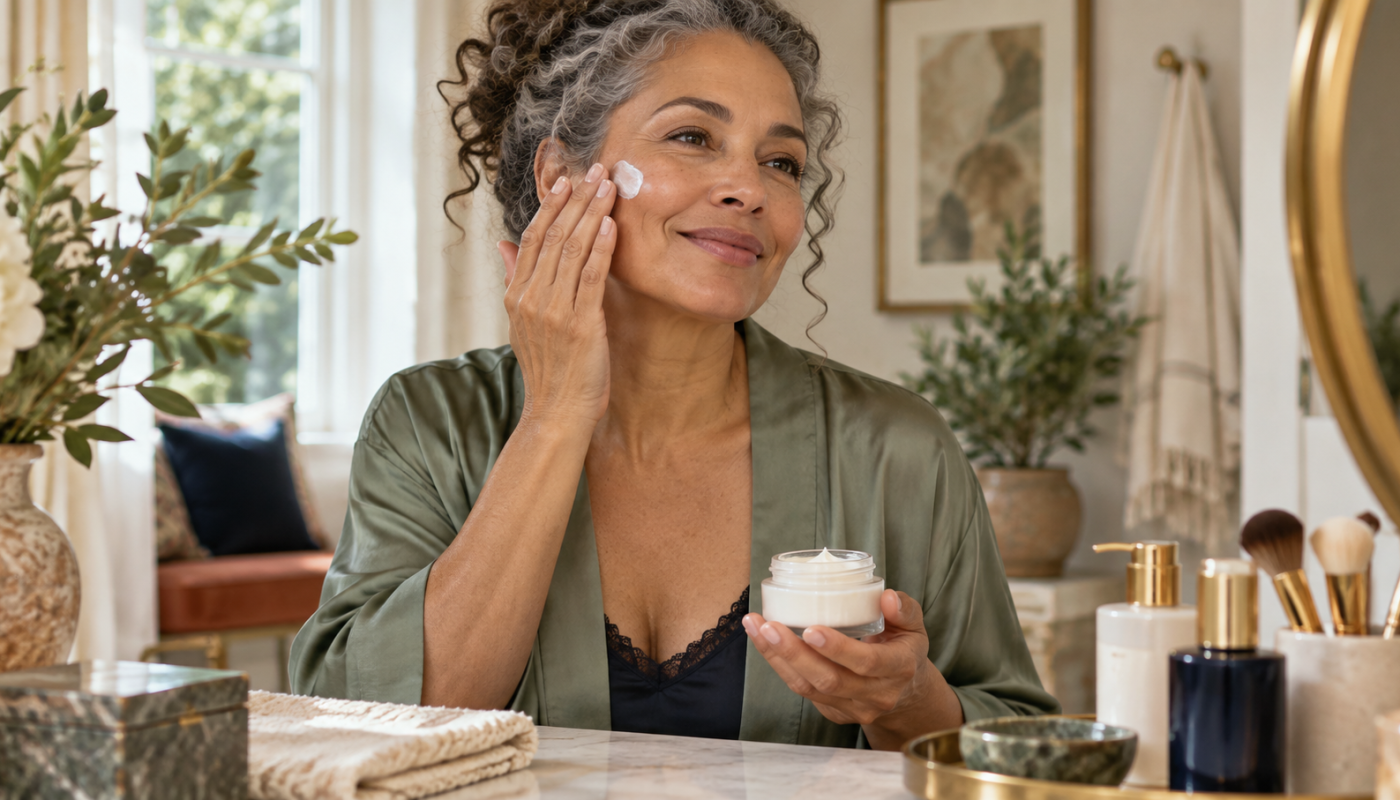
The skincare aisle can make a simple goal feel expensive: cleanser, moisturizer, sunscreen, and perhaps a product for one particular concern. In your forties and beyond, skin may feel drier or react differently to products that once worked beautifully. But a more complicated routine is not automatically a better one. The most useful approach is to build a dependable daily foundation, understand what ingredients are intended to do, and add treatments slowly rather than purchasing everything a social-media ad recommends.
Start with a gentle cleanser that suits your skin
Cleansing should remove sunscreen, makeup, sweat, and ordinary buildup without leaving your face tight or uncomfortable. Many people prefer a mild, fragrance-free cleanser, especially when their skin feels dry or sensitive. Wash with lukewarm water rather than very hot water, use your fingertips instead of abrasive scrubbers, and pat your face dry. If you wear heavy or water-resistant makeup, a separate makeup-removal step may help, but it does not have to involve an expensive product.
Notice how your face feels fifteen minutes after cleansing. If it is consistently itchy, stinging, or unusually tight, consider switching to a gentler formula. Products marketed for a specific age are not necessarily better; skin type, climate, and tolerance often matter more than the number printed on the packaging. If irritation persists or you have a skin condition, seek advice from a board-certified dermatologist.
Make sunscreen the nonnegotiable morning step
The American Academy of Dermatology recommends protecting exposed skin with broad-spectrum, water-resistant sunscreen rated SPF 30 or higher. Sun exposure contributes to premature changes in skin appearance and increases skin-cancer risk. Apply sunscreen before spending time outdoors and reapply as directed, including about every two hours during prolonged outdoor activity, as well as after swimming or heavy sweating.
Find a texture you are happy to wear regularly. Some formulas feel creamy and moisturizing; others are lighter under makeup. The most useful sunscreen is one you will apply in the recommended amount. A moisturizer containing adequate broad-spectrum SPF may work for some mornings, but make sure you use enough to obtain the labeled protection. Hats, shade, and protective clothing remain helpful alongside sunscreen.
Choose a moisturizer based on comfort, not packaging
Moisturizer helps hold water in the skin and can temporarily soften the appearance of fine lines. A lotion may be comfortable in humid weather, while a richer cream may suit very dry skin. Ingredients such as glycerin, ceramides, and hyaluronic acid are common in hydrating products, but your personal experience matters more than an ingredient trend. Apply moisturizer while the skin is still slightly damp if that feels comfortable and follow the product directions.
Do not assume that a small jar with a luxury price is more effective than a reasonably priced cream. The AAD’s product-selection guidance emphasizes sunscreen and moisturizer as sensible starting points, and notes that effective options exist at different price levels. This is especially useful when you are deciding whether a subscription box or promotional bundle offers genuine value.
Add one active treatment at a time
You may see products containing vitamin C, niacinamide, retinoids, or exfoliating acids. Each has different uses, and none is right for everyone. More active ingredients do not guarantee better results. If you want to address dark spots, uneven texture, or visible fine lines, choose one concern first and learn about the product’s instructions and potential irritation. Introduce a new treatment slowly and consider testing it on a small area before applying it widely.
Retinoid products deserve particular care because they may cause dryness and irritation and are not appropriate in every circumstance, including pregnancy. Ask a dermatologist or other qualified clinician if you are uncertain, especially if you have sensitive skin, rosacea, eczema, or use prescription treatments. Avoid combining multiple potent formulas on the same evening merely because an online routine suggests doing so.
A realistic morning routine
On a typical weekday morning, a gentle cleanse or rinse comes first, depending on your skin’s needs. Apply a moisturizer if desired, followed by adequate sunscreen. Makeup can follow once the products have settled. You can use additional products if you enjoy them, but none should replace sun protection. Organize your routine so that it fits comfortably into your actual mornings rather than creating another source of stress.
A realistic evening routine
At night, remove makeup and sunscreen gently. Follow with a moisturizer suited to your skin. If you have chosen a treatment product, use it according to its directions and the guidance of your dermatologist. On evenings when your skin feels irritated, it may be sensible to simplify back to a cleanser and moisturizer. Consistency and comfort are more sustainable than a complicated rotation of masks, scrubs, and serums that leaves the skin feeling raw.
How to shop without overpaying
Before buying a product, calculate what it costs per ounce or milliliter rather than comparing jars by appearance. Read the ingredient list for fragrances or substances you know irritate you. Check return policies, expiration information, and whether a trial automatically enrolls you in recurring deliveries. If a brand promises an overnight facelift, permanent wrinkle removal, or other dramatic results from a cream alone, be skeptical. Credible marketing should describe realistic outcomes and explain the evidence.
Try a 30-day approach: continue a gentle cleanser, moisturizer, and sunscreen, then consider whether there is a specific issue you would like professional guidance on. Take notes on comfort and irritation rather than expecting dramatic visible changes in a few days. Avoid purchasing five new products simultaneously because it becomes difficult to know what helped or what caused a reaction.
Remember the rest of your skin
Your hands, neck, and chest also receive sun exposure and may benefit from gentle cleansing, moisturizer, and appropriate sunscreen. After a shower, applying body lotion to slightly damp skin can make a straightforward routine feel more comfortable. Dry indoor air, frequent handwashing, and long hot showers may affect your skin, too. You do not need a separate luxury cream for every body part unless a professional has identified a particular need.
What is worth keeping in mind
The goal of skincare after 40 is not to look twenty-five. It is to keep your skin comfortable, protected, and cared for in a way that suits your budget. Start with the basics, pay attention to how your skin responds, and be cautious about dramatic promises. A short routine you enjoy every day can be more valuable than a crowded bathroom cabinet.
Editorial note: This article provides general skincare information and is not a diagnosis or a substitute for medical advice. Consult a dermatologist for persistent irritation, changing lesions, or individualized treatment choices.