
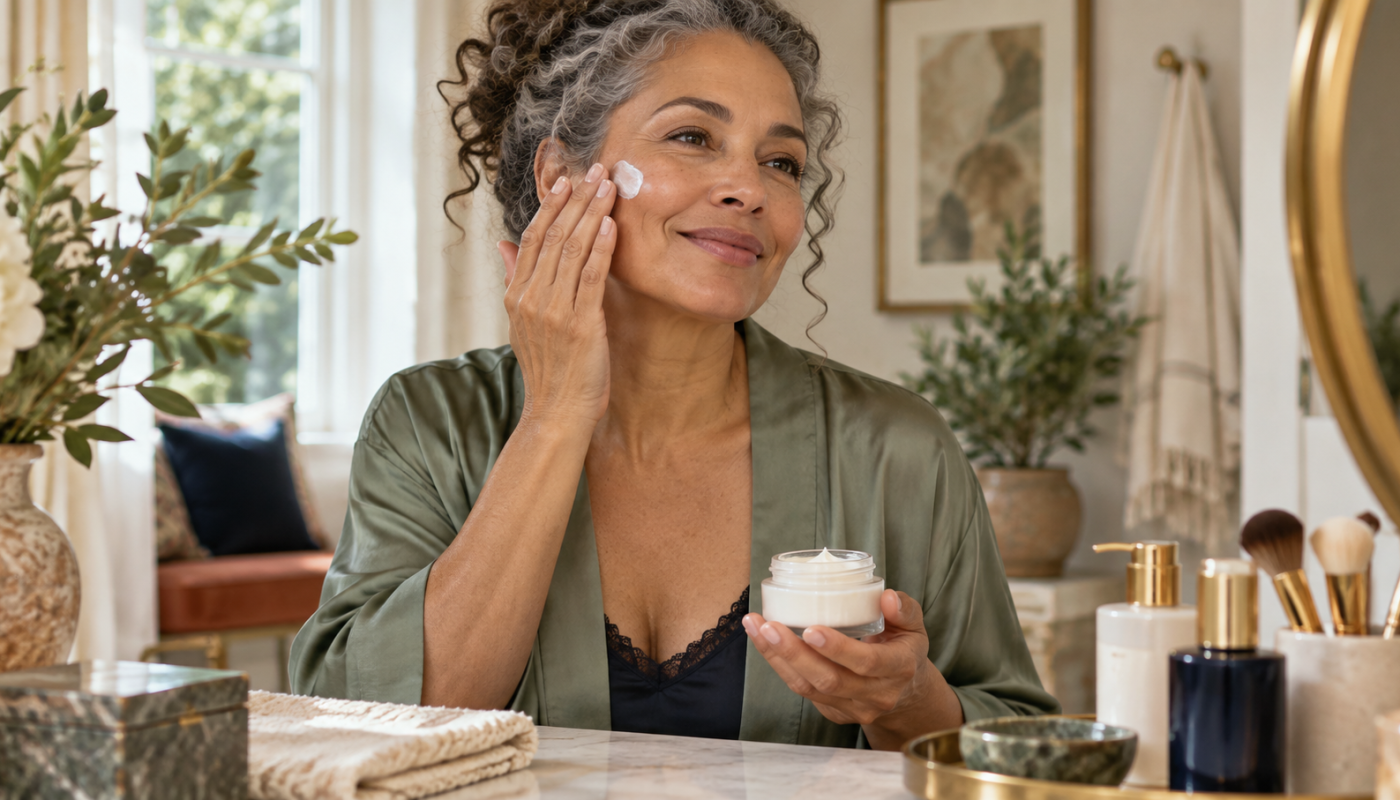
Sunscreen shopping can become surprisingly complicated. One shelf promises a weightless finish, another highlights expensive anti-aging ingredients, and an advertisement claims that a tiny bottle is the secret to flawless skin. If you are in your forties or beyond, the most valuable sunscreen is not automatically the newest or costliest. It is one that offers appropriate protection, feels comfortable on your skin, and fits your daily routine well enough that you will actually use it.
Begin with the protection information on the label
The American Academy of Dermatology advises choosing a broad-spectrum sunscreen with SPF 30 or higher and water resistance. Broad spectrum means coverage against both UVA and UVB radiation. SPF describes protection against sunburn-causing UVB rays when the product is used as directed. A higher SPF is not permission to stay in the sun indefinitely or skip reapplication.
Look for a clearly stated water-resistance duration when you plan to swim, sweat, or spend a long time outdoors. U.S. labels may indicate resistance for 40 or 80 minutes; that is not the same as waterproof protection. No sunscreen should be treated as completely waterproof. Reapply according to the instructions, particularly after swimming, sweating, or towel drying.
Find a texture that suits your skin
Skin can feel drier with age, but people of the same age may still have very different skin types. Rich creams may be comfortable on dry skin; lighter lotions or gels may be preferable when you dislike a heavy finish. Fragrance-free options may appeal to people who are sensitive to scented products. If you have a known skin condition or repeated irritation, consider asking a dermatologist for individualized advice.
A product that feels pleasant under makeup can make daily use easier. Test how it layers with your moisturizer and any complexion products you wear. If the sunscreen pills or leaves an uncomfortable film, check application timing and the amount of other products you are layering before assuming you need a more expensive option.
Understand mineral and chemical filters without the drama
Different sunscreen products use different permitted UV-filter ingredients. Some are commonly marketed as mineral formulas, while others are described as chemical or organic filters. Marketing sometimes implies that one entire category is perfect and the other is harmful, but real comparisons depend on the specific product, how it is used, personal tolerance, and current regulatory guidance. Choose an authorized product with the protection and texture you need rather than relying on alarming social-media claims.
For people who experience stinging around the eyes or sensitive skin, certain formulas may feel more comfortable than others. Tinted products can also help with cosmetic concerns such as a visible white cast. The goal is to find a practical solution, not to treat the ingredient label as a competition in which the most expensive formula wins.
Apply enough and make reapplication realistic
Even a high-quality sunscreen provides less protection than advertised if too little is applied. Follow the product’s instructions and the AAD’s sunscreen-application guidance. Give yourself time before outdoor exposure and remember frequently missed places such as the ears, neck, and backs of the hands. If you spend a prolonged period outdoors, reapply at the recommended intervals, generally about every two hours and after swimming or sweating.
Make a plan that fits your day. A travel-size bottle in a handbag may help with reapplication, provided you keep the product within its storage guidance and expiration date. Sun-protective clothing, hats, sunglasses, and seeking shade complement sunscreen; they are not replacements for it.
Compare value per ounce, not the price of the bottle
A small face sunscreen can be convenient, but its cost per ounce may be much higher than a larger product providing suitable protection. Compare labels, sizes, return policies, and how quickly you use each bottle. There is no requirement to buy a sunscreen marketed exclusively for faces or older adults if another appropriate formula works well for you.
Avoid paying extra for dramatic promises. Sunscreen is valuable for sun protection and may help reduce premature visible skin changes caused by sunlight, but it cannot erase years of aging overnight or act as a medical treatment for every skin concern. If an advertisement makes extraordinary claims without clear support, be skeptical and consult reliable sources.
A practical morning checklist
Cleanse gently, use moisturizer if needed, then apply enough broad-spectrum SPF 30+ sunscreen to exposed areas. Let it settle before makeup. If you expect outdoor activity, carry what you need to reapply and use physical protection such as a hat. The routine may take only a few minutes, but consistency is much more important than collecting several premium products.
Know when to ask for professional advice
A changing mole, unusual new lesion, or persistent skin irritation should not be evaluated solely through beauty articles or product reviews. Seek appropriate medical evaluation rather than trying to cover a concern with cosmetics. Sunscreen is a prevention tool, not a substitute for examining suspicious skin changes.
The sunscreen that belongs in your routine is one you can use correctly, consistently, and comfortably. Start with the label’s protection standards, check that the product suits your skin, and consider price only after those essentials are covered.
Editorial note: This article is general consumer and skincare information, not personalized medical advice. Product availability and labeling requirements vary by market.